The Customization Menu
Every custom garment order is a set of choices made along six axes: fabric, color, fit, decoration, trims and packaging. Some of those choices are effectively unlimited within the factory's capability, some carry a minimum quantity, and a few cannot be changed at all because they are fixed by how fabric, thread and machinery actually behave.
Knowing which is which before you brief a supplier is the difference between a quotation you can compare and a quotation that comes back with three questions and a revised price. Here is the practical menu, and the parts of it that are fixed.
Fabric, Weight and Hand Feel
Fabric is the largest single customization decision, because it sets the weight, the drape and the price of everything that follows. For streetwear the usual foundations are French terry, fleece and jersey, and each can be specified by composition and by weight in GSM — a midweight tee sits around 180–240 GSM, a heavyweight tee from 250 GSM, and a hoodie body is usually heavier still.
What can be customized: composition and blend ratio, weight, surface finish such as brushing or peaching, and stretch. What constrains it: mills produce fabric in runs, so a custom knit or a special composition usually carries a minimum, and an unusual weight can add both cost and lead time.
Color, Wash and Print Placement
Color is where perceived customization is highest and where the hidden minimums live. Solid dyed fabric, garment-dyed pieces, washed and faded finishes and printed effects all sit on one spectrum from "standard stock shade" to "developed specifically for you".
The rule worth knowing: color is what multiplies your minimum order quantity. Fabric is dyed in batches, so five colors in one style can mean five dye lots and five minimums rather than one. Consolidating a collection into fewer colors is one of the most effective ways to keep a first order affordable.
Fit, Size Range and Grading
Fit is customized through the base block and the grade rules. A brand can adjust body width and length, shoulder drop, sleeve length, hem and armhole, then specify how those measurements change between sizes. This is where a technical fit comment pays off: "make the body boxier" is not a specification, while "add 4 cm to the chest at the base size and keep the hem width unchanged" is.
Size range is a commercial decision as much as a technical one. Extending a run into additional sizes has a cost even when the pattern already exists, because every size has to be cut, sewn and measured separately, and our final inspection measures every piece individually rather than sampling a few.
Decoration: Which Method Suits Which Design
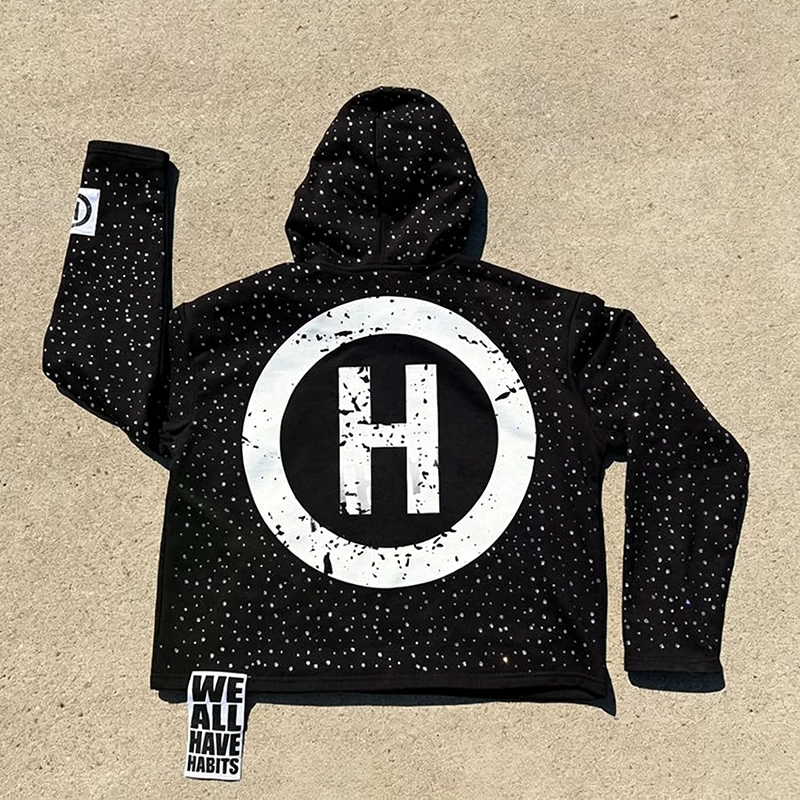
Decoration is usually the most visible customization and the most technical to specify. The factory's decoration capability covers the main streetwear techniques, and each behaves differently.
- Screen printing — best value at volume, strong opaque color on dark fabric, with a separate screen per color.
- DTG (direct to garment) — no screen setup, so it suits small runs and photographic detail, with softer saturation on dark fabrics.
- DTF heat transfer — fine detail and full-color gradients, applied after sewing.
- 3D computerized embroidery — premium and permanent, ideal for logos, patches and puff effects.
- Thick silicone and foam printing — raised, tactile surfaces that give a garment its own signature.
- Sublimation transfer — all-over prints, especially on polyester-rich fabrics.
A design can be customized freely, but a design that mixes screen print over a heavy seam, or a dense embroidery over a lightweight jersey, will need the artwork adapted rather than the garment forced to accept it. Sending artwork in layers rather than as a flat image is what lets the factory choose the right method instead of the most convenient one. The trade-offs are compared in print method comparison.
Trims, Labels, Hangtags and Packaging
Trims are the fastest way to make an ordinary garment look like a brand: woven neck labels, sleeve labels, custom zipper pulls, drawcord ends, buttons, rivets and size stickers. Labels and hangtags can carry your own logo, and packaging can be neutral or custom logo as required.
Three practical notes. Custom trims have their own lead times, separate from fabric and sewing. Label placement should be drawn into the tech pack rather than described verbally. And trims must be ordered at the same time as the fabric, because a missing label stops a shipment as effectively as missing cloth. When any of this is standard rather than bespoke, in-stock styles can shorten the whole timeline considerably.
What Cannot Be Customized — and Why
- A shade that matches a screen or a photograph exactly. Color is judged on physical references under a defined light, so approvals are made against a lab dip or a bulk swatch, not an image.
- Decoration detail beyond what the method resolves. A one-millimetre line in a print file may not survive screen printing, and fine gradients do not translate into embroidery thread.
- Grade rules that fight the base block. If a pattern is graded with a fixed increment, forcing a jump at one size distorts the fit above and below it — the block has to change instead.
- Fabric below the mill's minimum run. A special knit or an unusual composition is a mill commitment, and no amount of factory goodwill changes that.
- Shrinkage-free natural fabric. Cotton moves. The answer is controlled pre-shrinking and stated tolerance, not a promise of zero shrinkage.
What to Confirm Before You Approve a Quote
- Fabric composition, weight in GSM and the exact referenced shade.
- Color count per style, and whether each color carries its own minimum.
- Base size measurements plus the grade rules between sizes.
- Decoration method per placement, with artwork supplied in a usable format.
- Trim list with lead times, and label placement drawings.
- Packaging specification: neutral or logo, folding, polybags and cartons.
- Sample turnaround and bulk lead time, confirmed in writing.
Dongguan Yuejin Yi Garment Co., Ltd. is a one-stop OEM manufacturer for streetwear and custom apparel, with in-house screen printing, DTG, DTF, embroidery, silicone and sublimation lines, and low minimums from 50 pieces on selected styles. Send us your design and specification — we will confirm what can be customized, what it costs and how long it takes.